

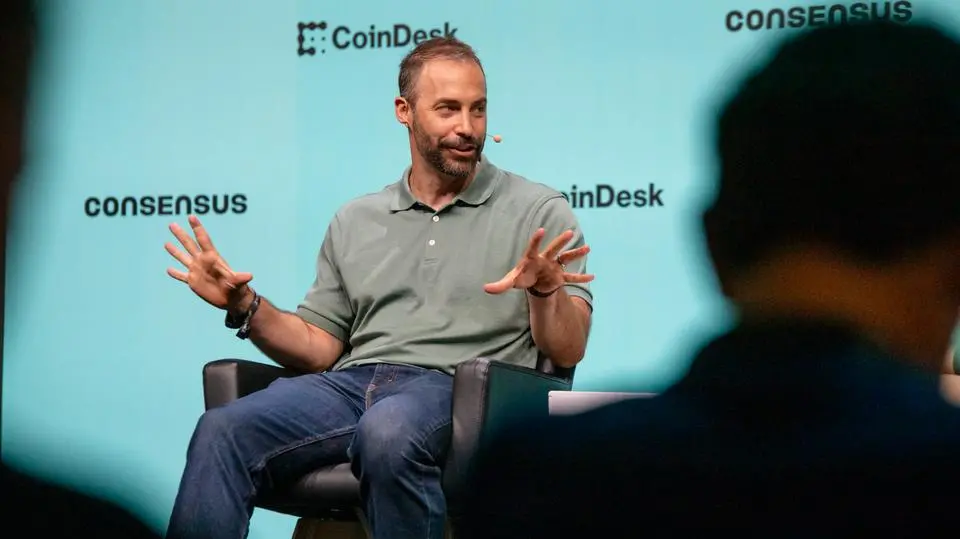
Bitcoin’s Looming Quantum Threat Demands Immediate Action, Says Project Eleven CEO
At the Consensus Miami conference on Wednesday, Project Eleven CEO Alex Pruden delivered a stark warning to the Bitcoin developer community: the migration to post-quantum signature schemes will be substantially harder than the Taproot upgrade and needs to begin immediately rather than waiting for quantum-computing hardware certainty. Pruden, a former executive at the crypto security firm Fireblocks, now leads Project Eleven, a Bitcoin-focused venture capital firm that backs early-stage startups building on the Bitcoin ecosystem.
Pruden’s remarks come as quantum computing continues to advance, with companies like IBM, Google, and startup Cerebras pushing the boundaries of qubit counts and error correction. While a cryptographically relevant quantum computer remains years away, the asymmetric risk is clear: once such a machine exists, every Bitcoin address using the current Elliptic Curve Digital Signature Algorithm (ECDSA) could be compromised within minutes, allowing attackers to drain funds from any exposed outputs.
The Taproot Comparison
To illustrate the scale of the challenge, Pruden compared the coming migration to Taproot, Bitcoin’s November 2021 upgrade that introduced Schnorr signatures and MAST (Merkelized Abstract Syntax Tree). Taproot took roughly five years from initial research to activation, but it remained opt-in—users and wallets could ignore it without losing security or functionality. “Taproot was a massive engineering effort, but it didn’t force anyone to change their behavior,” Pruden explained. “The post-quantum transition is fundamentally different. If you don’t migrate, your coins become vulnerable the moment a sufficiently powerful quantum computer exists.”
In a post-quantum world, every Bitcoin user, wallet, exchange, and merchant will need to adopt a new signature scheme, likely based on lattice-based cryptography such as CRYSTALS-Dilithium or FALCON, both finalists in the NIST post-quantum cryptography standardization process. Unlike Taproot’s voluntary upgrade, the post-quantum transition is mandatory for maintaining security, creating a logistical nightmare that must be orchestrated across the entire ecosystem.
Why Act Now?
Pruden stressed that waiting for certainty about the timeline of quantum computers is a dangerous strategy. “The asymmetry between the cost of acting today—writing code, testing, and deploying a soft fork—and the catastrophic cost of being caught unprepared is enormous,” he said. “We don’t need to know exactly when a quantum computer will break ECDSA. We need to have a plan and start implementing it before the panic hits.”
Several proposals exist for adding post-quantum signatures to Bitcoin, including the BIP 360 “P2QRH” (Pay-to-Quantum-Resistant-Hash) and more recent concepts like “OP_CAT” combined with Merkle tree commitments. However, none have reached the level of consensus needed for activation. The Bitcoin Improvement Process (BIP) is slow by design, ensuring security and decentralization, but Pruden argued that the community must move from “research and debate” into “production-ready proposals” within the next two to three years.
The Recycling Debate
During a question-and-answer session, Pruden was asked about the fate of Bitcoin that remains in quantum-vulnerable addresses after the migration. If a quantum computer appears, those coins could be stolen, but some in the community have suggested that such coins should be “recycled” back into Bitcoin’s monetary supply curve—essentially destroying or confiscating them to prevent theft. Pruden offered his personal view, stating that recycling would put him “overall” on the confiscation side. However, he quickly emphasized that the Bitcoin community and market will ultimately decide through open debate.
“We have precedents in Bitcoin history—think of the 2010 value overflow incident or the famous ‘$500 million Bitcoin locked in a landfill’ story,” Pruden said. “The community has always handled such situations through social consensus. Quantum-vulnerable coins may be treated differently depending on how the transition unfolds.”
Historical Context of Bitcoin Upgrades
Bitcoin has undergone several significant upgrades, each with its own level of complexity. The Segregated Witness (SegWit) soft fork in 2017 required widespread wallet and exchange support to achieve its scaling benefits, but it too remained optional. Taproot further improved privacy and smart contract flexibility but still allowed legacy addresses to function indefinitely. The post-quantum migration will break this pattern: legacy addresses will eventually become insecure, forcing a hard-to-avoid transition for all network participants.
Developers have compared the challenge to the Y2K bug or to the transition from SHA-1 to SHA-256—both required coordinated global updates. Bitcoin’s decentralized nature makes such coordination even harder, as no single entity can mandate changes. Pruden noted that the uncertainty around quantum computer timelines compounds the difficulty. “We might have ten years, we might have twenty. But if we wait until we’re sure, it will be too late to implement a safe migration without chaos.”
The Role of the Developer Community
Pruden called on Bitcoin Core developers to prioritize post-quantum research and begin writing reference implementations. He highlighted the work of researchers like Dr. Peter Wuille, who has been exploring lattice-based signatures in the context of Bitcoin, and the progress made by the Bitcoin Optech group in documenting upgrade strategies. “We have the brightest minds in cryptography working on this. We need to give them a clear mandate: deliver a production-ready proposal by 2028,” Pruden urged.
The economic implications are immense. With Bitcoin’s market capitalization hovering around $1.6 trillion, anything that threatens security could trigger massive sell-offs. Pruden drew parallels to the 2019 “quantum scare” when a paper claimed a 50-qubit quantum computer could break Bitcoin’s encryption—a claim later debunked but still causing temporary price volatility. “We cannot afford another scare. We need to show the market that we have a solution ready before the threat materializes.”
In conclusion (but not as a formal section), Pruden’s address at Consensus Miami underscores a growing urgency within Bitcoin’s leadership to treat quantum resilience as a top priority. The industry has watched advances in quantum computing with a mix of fascination and anxiety, but Pruden’s call to action moves beyond academic discussion into practical planning. The path forward will require unprecedented collaboration among developers, miners, exchanges, and users. For now, the Bitcoin community must decide whether to heed his warning and begin the long road toward a quantum-safe future.
Source: Coindesk News