

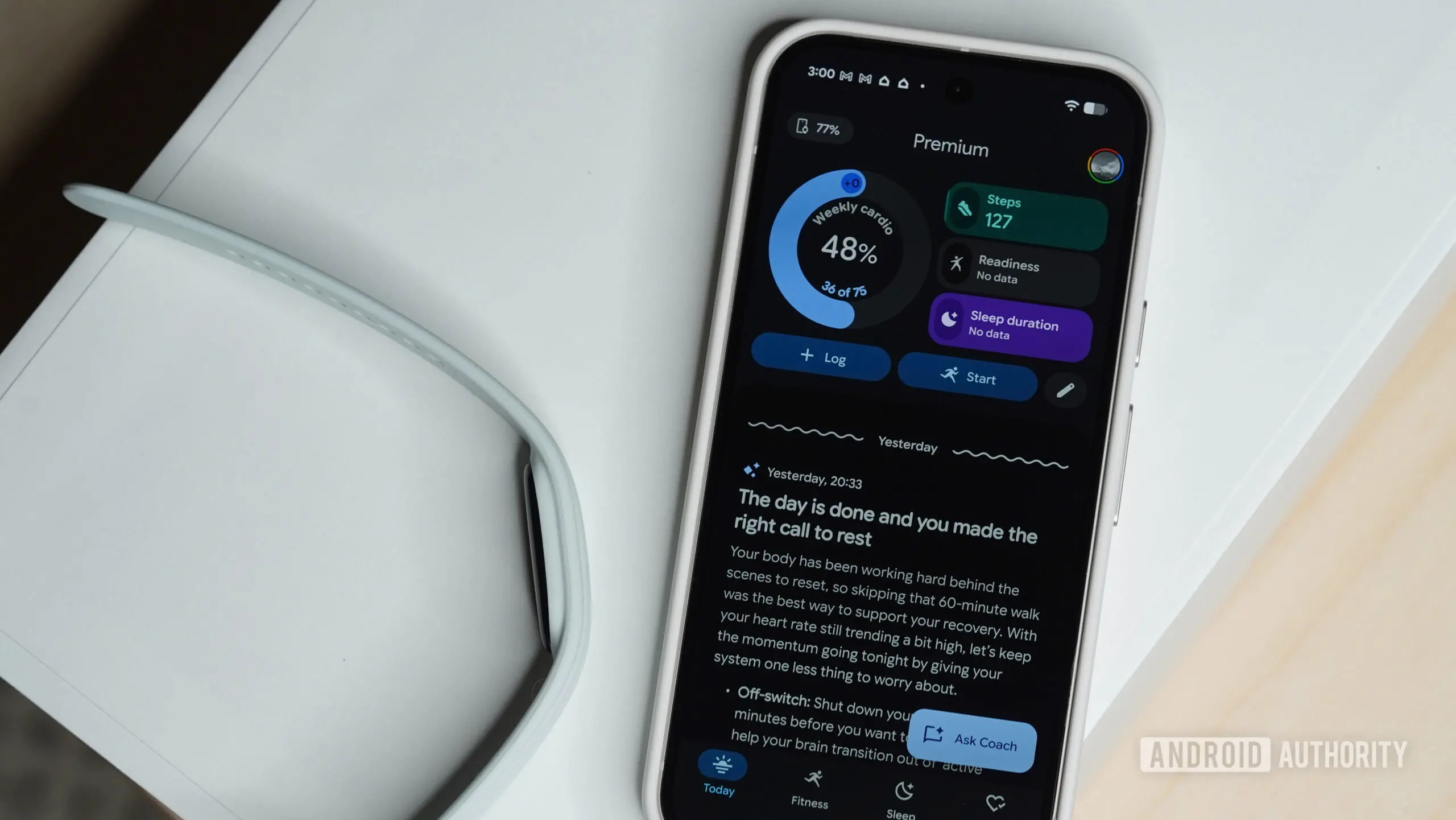
The Google Fitbit Air, the latest screenless fitness tracker from Google, has started reaching early buyers ahead of its originally expected May 26 delivery window. While the early shipments have delighted many customers, a significant snag has emerged for Android users: the device cannot be paired with their phones due to a missing app update.
Reports began surfacing over the weekend on social media platforms, with one Reddit user noting, "Got mine today as well, but I'm stuck on — app update required — and can't actually pair it." Shortly after, a member of Google's product team, identified as Andy, responded to the thread confirming the issue. "Hey, Andy from Google product team here – looks like your order arrived early! Sorry for the experience, as others have said here, confirming you do need the updated app. We are doing our best today to accelerate the rollout of the updated app on Android via Play to accommodate early deliveries and it should be available shortly."
The update in question is Google Health version 5.0. Google began rolling out this update a few days ago, but it has not yet reached all Android devices. Users who have already received the Fitbit Air are left with a non-functional wearable until the update arrives on their phones. In contrast, iOS users appear to be unaffected, as the updated Google Health app is already available through the App Store.
This situation highlights a common challenge in the tech industry: coordinating hardware deliveries with software updates. The Google Fitbit Air is a significant addition to Google's wearable lineup. It is a screenless fitness tracker that focuses on health metrics such as steps, heart rate, sleep tracking, and activity reminders, all while maintaining a compact, clip-on form factor. The device relies entirely on the Google Health app for setup, data synchronization, and display of detailed metrics. Without the updated app, the tracker cannot even establish a basic Bluetooth connection.
Background: The Journey from Fitbit to Google Fitbit
Google's acquisition of Fitbit was finalized in January 2021 for $2.1 billion, after a lengthy regulatory review. The deal aimed to combine Google's software prowess with Fitbit's established hardware and health tracking ecosystem. Since then, Google has gradually integrated Fitbit's technology into its own platforms. The Google Health app was introduced as a central hub for fitness and health data, initially supporting Google's own Pixel Watch and later expanding to other Android devices. The Fitbit Air represents the first wearable product bearing the Google name rather than the Fitbit brand, signaling a new direction for the company's fitness hardware.
The screenless design of the Fitbit Air is a deliberate choice. It targets users who prefer a minimalist approach to fitness tracking, without the distractions of a smartwatch display. The device clips onto clothing or can be worn with a band, offering continuous tracking without the need for a bulky screen. This design philosophy echoes earlier Fitbit models like the Fitbit Zip and Flex, but with modern sensors and integration with Google's ecosystem.
The Google Health 5.0 Update: What's New?
Version 5.0 of the Google Health app brings several enhancements that are critical for the Fitbit Air. According to Google's release notes, the update includes improved Bluetooth pairing algorithms, support for additional sensor data formats, and a redesigned dashboard that better aggregates data from multiple devices. For the Fitbit Air specifically, the app introduces a new setup wizard that guides users through placing the device correctly and calibrating sensors. Without this update, the app cannot recognize the Fitbit Air's hardware ID, leading to the pairing failure.
The rollout of Android app updates is often staggered to catch potential bugs. Google uses staged rollouts on the Play Store, where a percentage of users receive the update initially, followed by a broader release if no critical issues are found. In this case, the early shipments of the Fitbit Air caught Google off guard, exposing the time lag in the update's availability.
Interestingly, a user in the same Reddit thread asked whether Google Health can write data to Apple Health and Apple Fitness. The Google product team member responded positively, stating that support for writing to Apple Health is "coming soon." This would be a significant move, as it would allow users who own an iPhone but prefer the Fitbit Air's hardware to have their health data seamlessly sync into Apple's ecosystem. Currently, Google Health can read data from Apple Health but not write back. This change would likely encourage more cross-platform adoption of the Fitbit Air.
Implications for Future Product Launches
This episode serves as a lesson for both Google and consumers. For Google, it underscores the importance of synchronizing hardware shipments with software availability, especially for devices that rely entirely on a companion app. The company may need to implement a system that checks app version compatibility before shipping, or at least issue clear warnings to early buyers. For customers, it highlights the risks of pre-ordering new tech gadgets: the hardware might arrive before the software ecosystem is ready.
The Fitbit Air is priced competitively at $79.99, positioning it against other screenless trackers like the Xiaomi Mi Band 8 and Amazfit Neo. Its integration with Google Fit and the broader Google Health platform gives it an edge for users deeply embedded in Google's ecosystem. However, the initial pairing issue may dent early consumer confidence. Google has been quick to respond, which bodes well for customer support.
Update: Rolling Out Now
As of May 25, 2026, Google has confirmed to Android Authority that the updated Google Health app has rolled out to all users. Those who received the Fitbit Air over the weekend can now successfully pair their devices. The company also reiterated that support for Apple Health syncing is on track for a future update.
Early adopters who faced the frustration of an unusable device can now enjoy their new tracker. The Google Fitbit Air promises up to 10 days of battery life, automatic activity detection, and integration with Google's Assistant for quick voice commands. With the software hurdle cleared, the device is set to compete strongly in the screenless fitness tracker market.
Looking ahead, Google's wearable strategy appears to be gaining momentum. The Pixel Watch lineup continues to evolve, and the Fitbit Air fills a niche for users who want basic tracking without a screen. The company is also rumored to be working on a more advanced fitness band with a small OLED display, but no official announcements have been made.
For now, the focus remains on ensuring a smooth user experience for the Fitbit Air. The rapid response from Google's product team and the swift acceleration of the app update demonstrate the company's commitment to customer satisfaction. As word spreads that the pairing issue is resolved, more users are expected to purchase the device.
Source: Android Authority News