

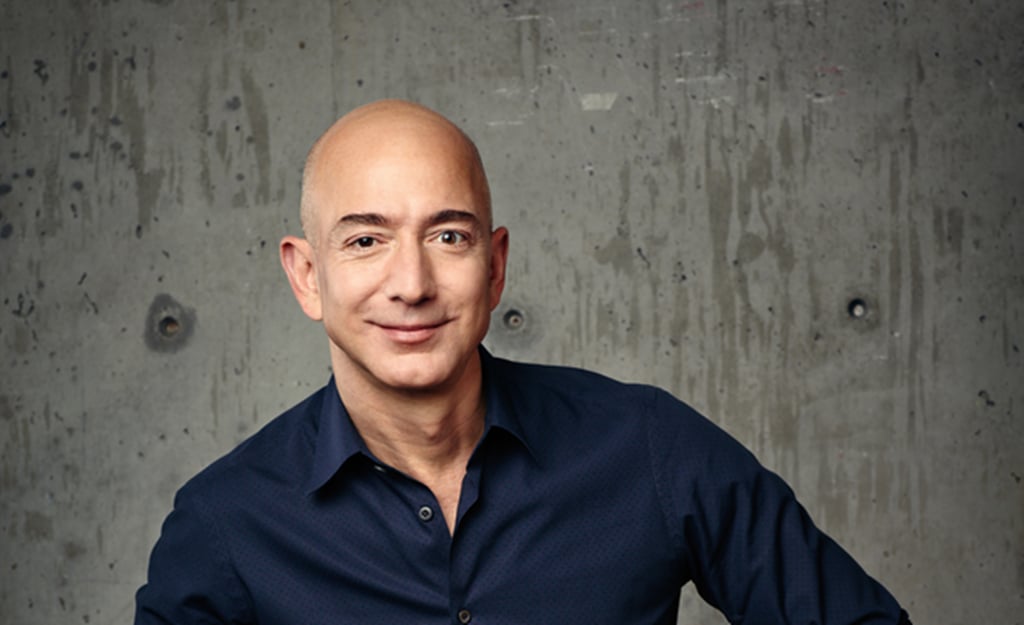
Jeff Bezos, the founder of Amazon and one of the world's most influential business leaders, has a clear message for those who predict mass unemployment due to artificial intelligence: they are 'dead wrong.' In a series of interviews and public appearances, Bezos has consistently pushed back against doomsday scenarios, arguing instead that AI will augment human work, create new industries, and ultimately lead to a more productive and prosperous society. His views offer a counterpoint to the growing anxiety around automation and job displacement.
The Historical Context of Technological Transformation
Bezos often draws parallels to previous technological revolutions. He points to the Industrial Revolution, which initially sparked fears of widespread job losses but ultimately led to the creation of entirely new categories of work. 'Farming was once the dominant occupation, and now it's a fraction of the workforce,' Bezos has noted. 'Yet we didn't run out of jobs; we invented new ones that no one could have imagined in 1750.' This historical perspective underpins his belief that AI will follow a similar trajectory.
The rise of the internet in the late 20th century is another example. When e-commerce began to grow, many predicted the death of retail jobs. Instead, retail evolved, and new roles in logistics, data analysis, and digital marketing emerged. Bezos, having been at the forefront of this transformation, sees AI as the next natural step. 'The doomsayers have been wrong every time,' he said. 'They underestimate human creativity and our ability to adapt.'
How AI Will Augment, Not Replace, Human Workers
A central theme in Bezos' argument is augmentation. He believes that AI will serve as a tool to make human workers more effective, not as a replacement. For example, in customer service, AI chatbots can handle routine queries, freeing up human agents to tackle complex issues that require empathy and problem-solving skills. Similarly, in healthcare, AI can assist doctors in diagnosing diseases by analyzing medical images, but the final decision and patient interaction remain with the physician.
Bezos points to Amazon's own experience. The company uses AI extensively in its fulfillment centers for inventory management and robot assistance, but human workers are still essential for tasks that require dexterity, judgment, and problem-solving. 'We have hundreds of thousands of employees, and we're still hiring,' he said. 'AI helps us be more efficient, but it doesn't replace the need for human ingenuity.'
The Economic and Societal Benefits
Beyond individual job roles, Bezos sees AI as a driver of economic growth. By automating routine tasks, AI can increase productivity, lower costs, and spur innovation. This, in turn, can lead to the creation of new markets and job opportunities. 'Think about the app economy,' he said. 'Ten years ago, there were no app developers. AI will do the same thing—create roles we can't even imagine today.'
Bezos also emphasizes the potential for AI to address societal challenges. From climate change to healthcare, AI can help analyze vast amounts of data and find solutions. 'The biggest gains will come in areas we struggle with today,' he said. 'AI isn't just about efficiency; it's about enabling breakthroughs that improve quality of life.'
Addressing the Risks and Ethical Considerations
While Bezos is optimistic, he acknowledges that there are risks that need to be managed. He supports the development of ethical guidelines for AI, including transparency, accountability, and bias reduction. 'We need to be thoughtful about how we deploy these technologies,' he said. 'But that doesn't mean we should slow down progress out of fear.'
He also stresses the importance of education and retraining. As AI changes job requirements, workers will need access to new skills. Bezos advocates for lifelong learning and government-industry partnerships to ensure that the workforce can adapt. 'The solution isn't to stop innovation; it's to prepare people for the changes that are coming,' he said.
Bezos' Own Journey with AI
Jeff Bezos has a personal stake in this debate. Under his leadership, Amazon became a pioneer in AI applications, from its recommendation engine to Alexa and cloud-based AI services via Amazon Web Services (AWS). After stepping down as CEO in 2021, Bezos has dedicated more time to his other ventures, including Blue Origin and his philanthropic efforts, but he remains deeply involved in technology trends.
In interviews, he often reflects on how AI transformed Amazon's operations. 'We started with simple algorithms for recommendations,' he said. 'Now we're applying machine learning to everything—demand forecasting, fraud detection, even drone delivery. Each step has made our business better and created more opportunities for our employees.'
Industry Reactions and Counterarguments
Not everyone agrees with Bezos. Some economists and labor advocates warn that AI could lead to significant job displacement, particularly in fields like manufacturing, data entry, and customer service. They argue that while new jobs may emerge, they might not be accessible to displaced workers without significant retraining, and the transition period could be painful.
However, Bezos counters that the benefits outweigh the risks. 'Every major technological advance has caused disruption,' he said. 'But we've always come out stronger on the other side. The key is to navigate the transition with intelligence and empathy.'
Other tech leaders, like Microsoft's Satya Nadella and Google's Sundar Pichai, have expressed similar optimism, though they also call for careful regulation. The debate continues, but Bezos remains a steadfast voice of confidence in the future of work.
Preparing for an AI-Powered Future
For businesses and individuals, Bezos' message is clear: embrace AI rather than fear it. Companies should invest in AI tools that augment their workforce, and workers should seek to understand how AI can make their jobs more fulfilling. 'The people who prosper will be those who learn to work alongside AI,' Bezos said. 'It's not a threat; it's an opportunity.'
He also encourages governments to create policies that foster innovation while protecting workers. This includes updating educational curricula to include data literacy and critical thinking, as well as providing safety nets for those displaced by automation. 'We need to think like builders, not protectors of the status quo,' he added.
In conclusion, Jeff Bezos offers a powerful counter-narrative to the AI doom-and-gloom stories. By contextualizing AI within historical patterns of innovation and focusing on augmentation rather than replacement, he paints a future where humans and machines work together to achieve more than either could alone. Whether one agrees fully or not, his perspective forces a more nuanced conversation about the role of AI in our lives and economies. The onus is on all of us—leaders, workers, and policymakers—to ensure that this technology serves humanity's best interests.
Source: eWEEK News