

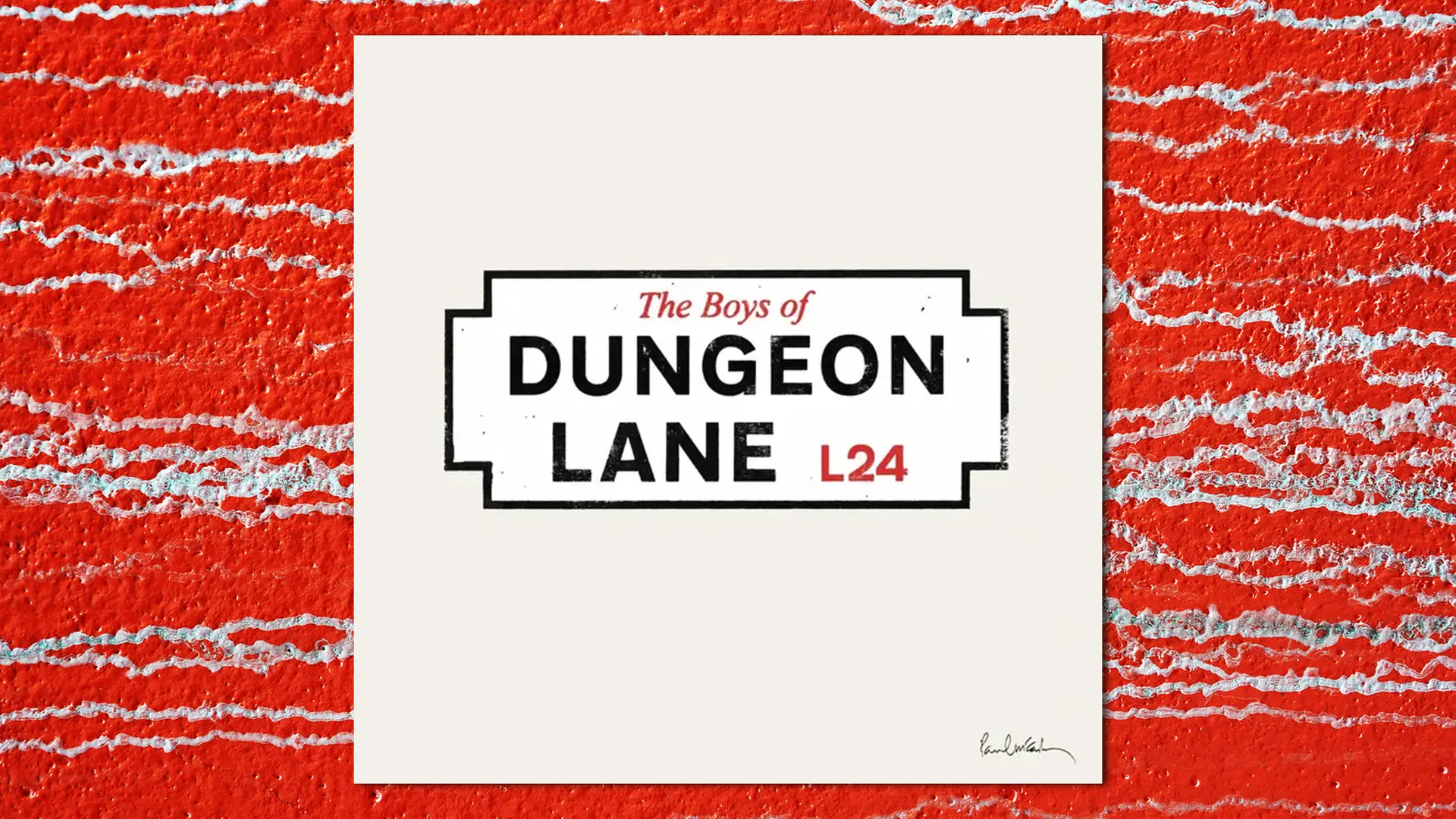
Paul McCartney's latest solo album, The Boys of Dungeon Lane, is a deeply personal and nostalgic journey into the heart of his childhood in post-war Liverpool. Released on May 29, 2026, this 14-track collection marks McCartney's 18th studio album and arrives just before his 84th birthday. The title itself evokes a specific street in Liverpool where McCartney rode his bicycle as a young boy with his brother, before his family moved to a council house on Forthlin Road. This album is not just a musical offering; it is a sonic memoir, blending McCartney's signature melodic craftsmanship with raw, autobiographical storytelling.
The album opens with the poignant track "Home To Us," a duet with fellow Beatle Ringo Starr. The lyrics, "You could say the place we lived wasn't so great, but it was home to us," capture the essence of McCartney's reflection on his humble beginnings. This collaboration is particularly significant as it marks the first official duet between the two surviving Beatles on a McCartney studio album. Their voices, aged but full of warmth, harmonize over a simple, acoustic arrangement, evoking the spirit of their shared Liverpool roots. The song's production, under the guidance of Andrew Watt (known for his work with Ozzy Osbourne and Eddie Vedder), strips away unnecessary ornamentation, allowing the emotional core to shine. Watt has described the album as a "pure McCartney record," focusing on the raw sound of McCartney's bass, guitar, and piano, with his voice—now deeper and more fragile than in his youth—placed front and center.
McCartney's storytelling extends far beyond the title track. The Boys of Dungeon Lane is a concept of sorts, chronicling his early years before the formation of the Beatles. Songs like "Down South" recount his teenage hitchhiking adventures with George Harrison to the south of England, a theme of escape and discovery that has long been a part of McCartney's narrative. Another track, "Ripples On A Pond," channels the power pop energy of his 1980s band Wings, while "Mountain Top" experiments with a harpsichord and distorted vocals, a clear nod to the psychedelic experiments of the late Beatles era. The album's diversity showcases McCartney's unparalleled ability to weave genres—from folk ballads to rockabilly, from orchestral pop to synth-driven melodies—into a cohesive whole.
The most emotionally resonant moments on the album are the songs dedicated to McCartney's parents. "Salesman Saint" reflects on the struggles and dreams of the war generation, likely inspired by his father Jim McCartney, who worked as a cotton salesman and played trumpet in local dance bands. The piano ballad "Momma Gets By" is a tender tribute to his mother Mary, a midwife who died of breast cancer when Paul was just 14. McCartney has always spoken of his mother's influence on his life and music, and this song finally gives her a dedicated place in his recorded work. The lyrics paint a picture of a resilient woman who 'gets by' in tough times, a universal theme that will resonate with many listeners. The production on these tracks is sparse, letting the piano and voice carry the emotional weight—a technique reminiscent of Johnny Cash's late-career American Recordings series, which Watt has cited as an influence.
To fully appreciate the autobiographical depth of The Boys of Dungeon Lane, one must understand the context of McCartney's early life. Liverpool in the post-war era was a city scarred by bombing, yet imbued with a resilient, gritty spirit. As McCartney himself noted in the podcast The Rest Is Music, "Liverpool has a very strong character. Through World War Two, this feeling arose of having to be cheerful even though bombs were falling. You kept your head above water." This ethos permeates the album. The street Dungeon Lane itself is not a grand boulevard; it's a modest lane in the Allerton area of Liverpool, where McCartney lived from 1942 to 1947. The move to 20 Forthlin Road—now a National Trust property—followed, and it was in that tiny house that McCartney and John Lennon wrote some of their earliest songs. By revisiting these locations and emotions, McCartney offers fans an intimate look at the environment that shaped one of the most influential musicians in history.
McCartney's decision to play most of the instruments himself—bass, guitar, drums, synthesizers—recalls his lockdown album McCartney III (2020), which was recorded in isolation. This solo approach gives The Boys of Dungeon Lane a homemade, intimate feel, but it also underscores his legendary multi-instrumentalism. Never one to rest on his laurels, McCartney continues to explore new production techniques while remaining rooted in his classic songwriting. The album's lead singles had already created a buzz, and critics have praised McCartney's willingness to look backward without sentimentality. The track "Salesman Saint" features a spoken word section where McCartney recounts a memory of his father returning home from work, a detail that adds a documentary-like quality to the song.
The wider musical landscape has also embraced McCartney's return. In the same year as the album's release, hype surrounding the Beatles' catalog continues to endure, with new generations discovering the band through films, documentaries, and streaming. The Boys of Dungeon Lane fits neatly into this narrative, acting as a companion piece to the Beatles' own early work. It also offers a counterpoint to the more polished, pop-oriented albums of McCartney's later career, such as Egypt Station (2018) or McCartney III. Here, the production is raw and intimate—engineered by Greg Kurstin, with Watt at the helm—highlighting the emotional immediacy of McCartney's songwriting.
This album may be seen as a fitting capstone to a legendary career, but it also feels like a new beginning. McCartney, now in his ninth decade, shows no signs of slowing down. He has already hinted at a world tour to support the album, and fans eagerly await the chance to hear these songs live. The album's autobiographical nature ensures that even the most casual listener will gain a deeper understanding of the man behind the music. For Beatles enthusiasts, it's a treasure trove of references—from the mention of "Mersey Beat" in one song to the orchestral swirls that recall Sgt. Pepper. For newer fans, it's a gateway into the enduring power of McCartney's storytelling.
Ultimately, The Boys of Dungeon Lane is a testament to the power of memory. McCartney does not merely recount his past; he relives it, inviting the listener to walk the streets of his youth, feel the weight of his grief, and share in the simple joys of a time long gone. The album's closing track, "Ripples On A Pond," ends with a fade-out of children's laughter, a subtle reminder that the world McCartney came from is still present in the laughter of new generations. With this album, Paul McCartney has built himself a monument—a small, unassuming, but deeply touching one. He could stop now, but we hope he won't.
Source: ndr.de News