

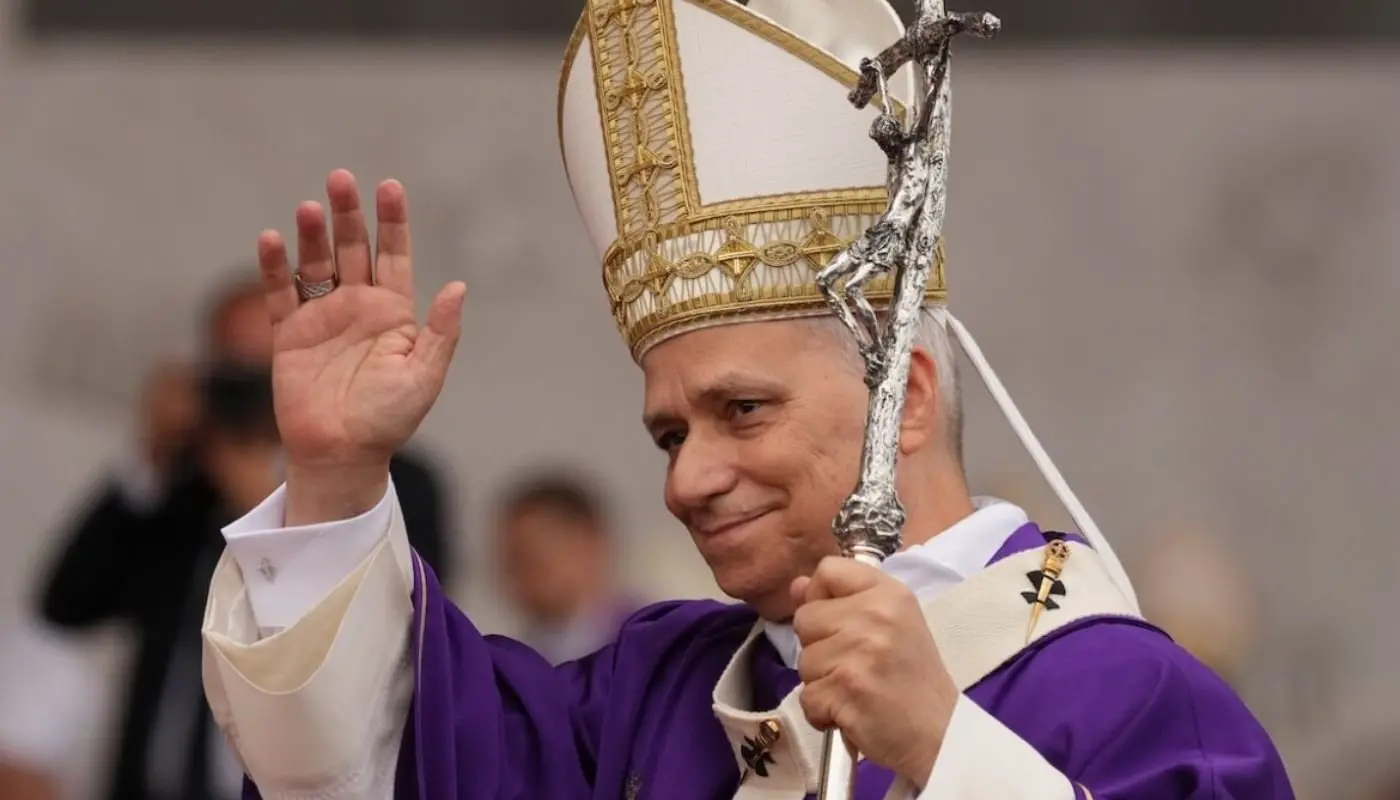
VATICAN CITY — In his first encyclical letter, titled Veritatis Splendor in Machina (The Splendor of Truth in the Machine), Pope Leo XIV has issued a sweeping call for a fundamental rethinking of how artificial intelligence is governed and deployed. The document, released today from the Apostolic Palace, argues that the current emphasis on so-called 'moral AI'—systems programmed with ethical guidelines—is insufficient to address the deeper spiritual, social, and existential challenges posed by rapidly advancing technology.
'We must not be content with creating algorithms that merely avoid harm,' the Pope writes. 'A machine that does not kill, does not lie, and does not steal is still a machine that lacks a soul. The question before us is not only how to make AI moral, but how to ensure that its rise serves the integral development of every human person.'
The encyclical comes at a time when global leaders and tech executives are increasingly grappling with the risks of unchecked AI development. From biased hiring algorithms to autonomous weapons and the spread of disinformation, the potential for harm has sparked a wave of regulatory efforts worldwide. Yet Pope Leo XIV contends that such efforts, while necessary, often reduce ethics to a checklist of rules that can be easily circumvented or manipulated.
The Limits of Rule-Based Ethics
Drawing on centuries of Catholic moral theology, the Pope argues that true ethical behavior requires not just compliance with external norms, but an internal disposition towards the good—something that machines, by their nature, cannot possess. 'A moral algorithm is a contradiction in terms,' he writes. 'Ethics is not a code; it is a relationship with truth, with others, and with God.'
The encyclical traces the history of ethical thought from Aristotle to Thomas Aquinas to modern virtue ethics, emphasizing that human flourishing depends on cultivating virtues such as prudence, justice, fortitude, and temperance. While AI can be trained to mimic virtuous outcomes, it cannot practice virtue itself, and thus cannot be held morally accountable for its actions. This distinction, the Pope argues, has profound implications for how we assign responsibility when AI systems cause harm.
'If an autonomous vehicle kills a pedestrian, who is at fault?' he asks. 'The programmer? The manufacturer? The owner? Or the machine? Our legal and moral frameworks are ill-equipped to answer these questions, and the rush to label AI as 'ethical' only postpones the reckoning.'
A Call for Human-Centric Design
Rather than focusing solely on prohibiting bad outcomes, the encyclical calls for a positive vision of AI that actively promotes human dignity, solidarity, and the common good. Pope Leo XIV urges technologists, policymakers, and religious leaders to work together to ensure that AI is designed with a 'human ecology' in mind—respecting the interconnectedness of individuals, communities, and the natural world.
He warns against the temptation to delegate moral decision-making to machines, even in areas like healthcare, criminal justice, or warfare. 'A human being must always remain the subject, not the object, of technological processes,' the Pope writes. 'When we hand over judgment to an algorithm, we risk dehumanizing the very people we seek to serve.'
The encyclical also addresses specific applications of AI, including facial recognition, predictive policing, and social credit systems. Pope Leo XIV condemns the use of AI to surveil and control populations, calling such practices 'a new form of totalitarianism' that undermines human freedom and privacy. He calls for a global moratorium on the development of autonomous weapons systems that can make life-and-death decisions without human intervention.
Theological and Philosophical Underpinnings
To ground his argument, the Pope delves into the Christian understanding of the human person as created in the image of God (imago Dei). This concept, he argues, confers an intrinsic dignity that cannot be replicated or replaced by machines. 'No matter how advanced AI becomes, it cannot possess a soul, it cannot love, it cannot sacrifice itself for another. These are not limitations; they are the very marks of what it means to be human.'
The encyclical also engages with contemporary philosophical debates about consciousness and personhood. While acknowledging that some forms of AI may one day exhibit behaviors indistinguishable from humans, Pope Leo XIV insists that such mimicry does not confer moral status. 'We must resist the temptation to anthropomorphize machines, just as we must resist the temptation to mechanize human beings,' he writes.
This perspective has implications for emerging technologies like brain-computer interfaces and digital immortality. The Pope cautions against the transhumanist dream of uploading human consciousness into a digital substrate, calling it 'a misguided quest to escape the finite, embodied nature that God has given us.'
Reactions and Implications
The encyclical has already sparked intense debate among theologians, technologists, and ethicists. Supporters praise its nuanced approach, arguing that it moves beyond simplistic debates about AI safety to address deeper questions of meaning and purpose. Critics, however, worry that its theological language may be inaccessible to secular policymakers and that its call for a moratorium on autonomous weapons is unrealistic in the current geopolitical climate.
Dr. Elena Rossi, a professor of AI ethics at the University of Bologna, called the document 'a timely and necessary intervention.' She noted that 'many AI researchers are hungry for a broader ethical framework, and the Pope's emphasis on human dignity provides a compelling starting point.'
Vatican insiders suggest that the encyclical is just the beginning of a broader papal initiative on technology. Sources indicate that Pope Leo XIV plans to convene a global summit of tech leaders, ethicists, and religious figures later this year to develop concrete guidelines for AI governance. The summit, tentatively titled 'Splendor in the Machine,' would be the first of its kind to bring together representatives of major world religions with Silicon Valley executives.
The Road Ahead
The encyclical Veritatis Splendor in Machina does not provide a simple checklist of dos and don'ts. Instead, it offers a vision of technology that is at once humble and hopeful—one that recognizes both the immense power of AI and the profound mystery of the human spirit. 'In the end,' the Pope writes, 'the question is not whether AI can be moral, but whether we, as a human family, have the wisdom to use it for good.'
As governments around the world race to regulate AI, the Pope's message may resonate far beyond the Catholic Church. It challenges not only the tech industry but also the broader culture to reconsider what we mean by 'progress' and whether our machines are truly serving our highest aspirations. For Pope Leo XIV, the answer lies not in more sophisticated algorithms, but in a deeper conversion of the human heart.
Source: eWEEK News