

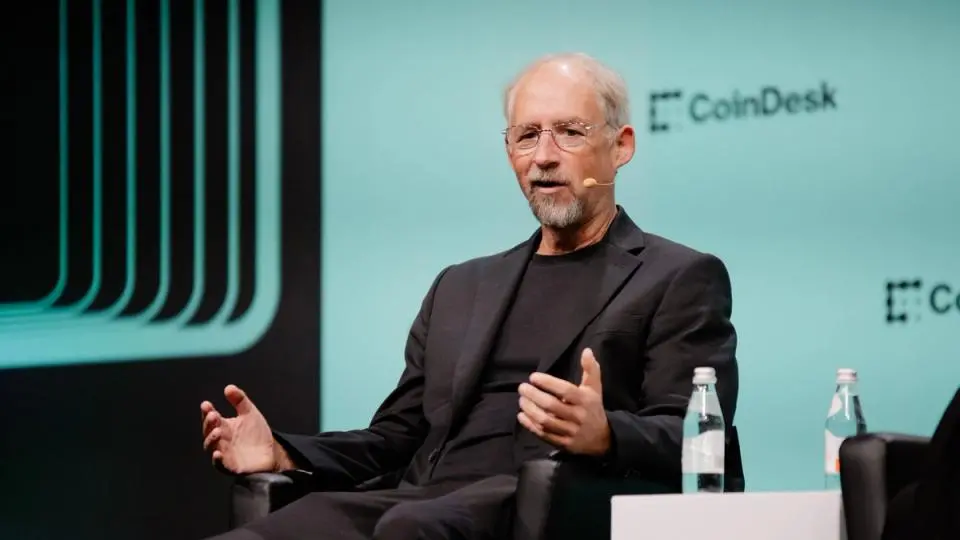
At Consensus Miami 2026, Blockstream CEO Adam Back delivered a powerful message: Bitcoin is winning the DeFi security war. Speaking to a packed audience, Back argued that the recent spate of exploits on decentralized finance platforms has only reinforced institutional preference for Bitcoin's simpler, security-focused infrastructure. 'Safety first,' he said, 'is not just a slogan—it's the foundation of Bitcoin's design.'
Back's comments come at a time when DeFi exploits have cost the industry billions. In 2025 alone, hacks and vulnerabilities drained over $3 billion from various protocols, shaking investor confidence. By contrast, Bitcoin's conservative design philosophy has kept its core network virtually impenetrable. Back emphasized that this track record matters immensely for institutional players who cannot afford reputational damage. 'Sovereigns, pension funds, and treasury companies are looking at Bitcoin not as a speculative asset, but as a secure store of value and a platform for financial innovation,' he said.
The Blockstream CEO argued that Bitcoin layer-2 systems, such as the Lightning Network and sidechains like Liquid, could support tokenization and decentralized finance without compromising Bitcoin's security model. He pointed to ongoing developments that allow for complex smart contracts, tokenized assets, and even decentralized exchanges on Bitcoin-based layers. 'We don't need to reinvent the wheel every time a new chain launches,' Back said. 'Bitcoin's security is the gold standard. Layer-2s let us build on top of that without introducing the risks that come with new, untested base layers.'
Back predicted that the next major wave of bitcoin adoption will come through institutional portfolio allocations, sovereign entities, and pension funds gaining bitcoin exposure. He noted that several sovereign wealth funds and central banks are already exploring bitcoin as a reserve asset, and that regulatory clarity in jurisdictions like the United States—especially with the progress of bills like the CLARITY Act—will accelerate this trend. 'We're moving from retail to institutional, and from speculative to strategic,' he said.
To understand the significance of Back's stance, it helps to look at his background. Adam Back is a renowned cryptographer and cypherpunk, best known for inventing Hashcash—the proof-of-work system that became the foundation of Bitcoin mining. His work influenced Satoshi Nakamoto directly, and his company Blockstream has been at the forefront of Bitcoin development, particularly in scaling solutions like the Lightning Network and sidechains. Back's credibility in the security community is unmatched, which gives weight to his warnings about DeFi risks.
The DeFi security war, as Back frames it, is not just about preventing hacks. It is about building a financial system that can withstand systematic attacks, regulatory pressures, and technical failures. Bitcoin's simplicity—its limited script capabilities and conservative upgrade process—makes it harder to exploit. Other blockchains often prioritize flexibility over security, leading to complex codebases with larger attack surfaces. Back argues that this tradeoff is not necessary: 'You can have expressiveness and security if you build responsibly. Bitcoin layer-2s prove that.'
Back also addressed concerns about Bitcoin's energy consumption, a topic often raised by critics. He reiterated that Bitcoin mining increasingly uses renewable and stranded energy, and that the network's security depends on energy-intensive proof-of-work. 'Energy is the cost of security in a permissionless system,' he said. 'And as the grid becomes greener, Bitcoin becomes greener too.'
During the Q&A session, Back was asked about the rise of AI in crypto. He noted that AI can be a double-edged sword: it can help detect vulnerabilities and optimize trading strategies, but it also enables more sophisticated attacks. He praised tools like Anthropic's Claude for helping users recover lost assets, but cautioned against over-reliance on AI for security decisions. 'AI is a tool, not a trust anchor,' he said.
The conversation then turned to tokenization of real-world assets. Back revealed that Blockstream is working on several projects to tokenize everything from real estate to corporate bonds using Liquid and other Bitcoin layers. He claimed that the total addressable market for tokenized assets could exceed $85 trillion, citing the recent launch of CME Nasdaq crypto index futures as a sign of growing institutional appetite. 'Bitcoin's security model makes it the ideal base layer for the tokenization economy,' he said.
Back also touched on the role of regulation. He noted that the CLARITY Act, which recently cleared a Senate committee, provides legal clarity for digital assets and could pave the way for banks and pension funds to hold bitcoin directly. 'Regulation shouldn't be about picking winners and losers,' he said. 'It should be about protecting consumers while allowing innovation. Bitcoin's transparent, auditable ledger offers the best of both worlds.'
Several other speakers at Consensus Miami echoed Back's sentiments. The conference, held in the wake of multiple DeFi exploits, featured panels on security best practices, institutional custody, and the future of decentralized finance. A recurring theme was that Bitcoin's 'boring' approach to security is actually its greatest strength. 'Innovation doesn't have to come at the cost of safety,' Back concluded. 'Bitcoin proves that you can have both.'
As the session ended, the audience gave Back a standing ovation. His message was clear: in a landscape full of flashy new protocols and repeated security failures, Bitcoin's conservative, time-tested approach is winning the DeFi security war. For institutions looking to enter the space, that message could not be more timely.
Source: Coindesk News