

Revolutionizing the Dashboard: Ferrari Luce's Samsung-Powered OLED Interface
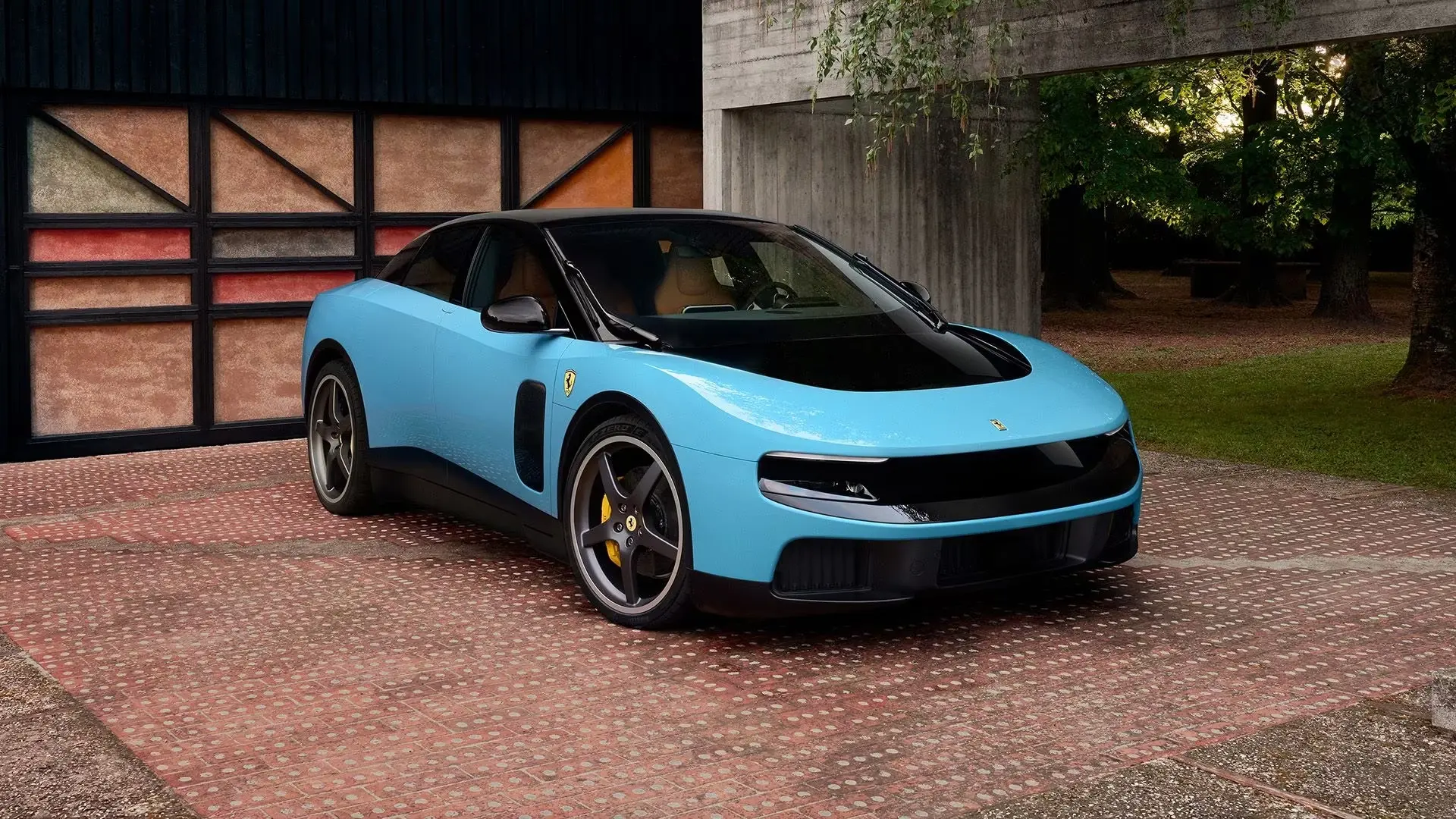
Ferrari has officially unveiled its first-ever electric vehicle, the Luce, and with it comes a cabin design that defies the current trend of massive, monolithic touchscreens. Instead, the Italian automaker has collaborated with Samsung Display to create a unique, layered instrument cluster that blends cutting-edge OLED technology with physical mechanical gauges. At the heart of this innovation is Samsung's HIAA (Hole in Active Area) display technology, which first appeared in the Galaxy S10 and Note 10 to accommodate front-facing cameras through tiny punch-hole cutouts. For the Ferrari Luce, Samsung has scaled up this concept dramatically, creating a 100mm-wide opening in the OLED panel—roughly 20 times larger than a typical smartphone camera cutout—to allow a lower screen and real mechanical hands to coexist within the same display area.
The result is a dashboard that resembles something between a luxury smartwatch and a futuristic aircraft cockpit. Two OLED panels are stacked, with physical gauge needles moving through the space between them. This layered approach preserves the tactile satisfaction of analog instruments while harnessing the flexibility and high contrast of OLED displays. The central control panel also gets a 10.1-inch OLED display with HIAA technology, where three mechanical hands rotate 360 degrees through perforations in the screen, displaying a clock, stopwatch, and compass.
The Technology Behind the Magic: Samsung HIAA Displays
Samsung's HIAA technology was originally developed to enable edge-to-edge smartphone displays by drilling tiny holes for cameras without disrupting the active pixel area. In the Ferrari Luce, this same principle is applied on a much larger scale to create massive openings that preserve OLED functionality around physical moving parts. The chemical etching and laser cutting processes used to make the 5mm smartphone holes have been refined to maintain structural integrity and image quality over a 100mm expanse. This opens up new possibilities for automotive displays, where drivers demand both high-tech interfaces and the reliability of analog gauges.
The Luce features four OLED panels supplied exclusively by Samsung Display. The layered instrument cluster is the most complex, but the central touchscreen also incorporates HIAA cutouts for physical buttons and dials. Samsung's expertise in OLED manufacturing—honed through millions of Galaxy phones and tablets—allows Ferrari to offer a premium in-car experience with deep blacks, vibrant colors, and ultra-smooth animations. The mechanical hands are driven by stepper motors that synchronize with the digital display, creating a seamless hybrid interface that updates in real time.
Jony Ive's Design Influence: A Marriage of Apple Aesthetics and Ferrari Passion
Perhaps the most intriguing aspect of the Ferrari Luce is the involvement of Sir Jony Ive, the legendary industrial designer who defined Apple's physical products for decades. Ive, through his independent design firm LoveFrom, collaborated with Ferrari on the overall design language of the Luce. His fingerprints are evident in the minimalist yet expressive lines, the careful integration of materials like carbon fiber and leather, and the obsessive attention to detail in the cabin.
Ive's partnership with Ferrari represents a rare convergence of tech and automotive design. He brought his philosophy of "delight through simplicity" to the Luce, ensuring that the complex OLED dashboard does not overwhelm the driver. The physical gauges and digital screens coexist with deliberate hierarchy, prioritizing essential driving information while offering customizable digital widgets. This reflects Ive's belief that technology should be invisible when not needed and intuitive when engaged.
The choice to use Samsung displays, despite Ive's deep history with Apple, highlights the pragmatic, cross-industry collaboration required for such an ambitious vehicle. Samsung's panel technology was the only one capable of meeting Ferrari's requirements for durability, brightness, bendability, and the unique HIAA implementation. This decision underscores how modern automotive innovation draws from diverse tech ecosystems.
Background: The Electric Supercar Market and Ferrari's Strategy
Ferrari's entry into the electric vehicle space comes later than some competitors, such as Porsche with the Taycan and Rimac with the Nevera, but the Luce is positioned as a true flagship that redefines the brand's identity. Ferrari has been investing heavily in hybrid technology with models like the SF90 Stradale, but the Luce is their first full BEV. The company aims to keep the Ferrari DNA—passionate sound, thrilling performance, and luxurious craftsmanship—while embracing zero-emission powertrains.
The Luce is expected to have a power output exceeding 1,000 horsepower, with a battery pack integrated into the chassis for optimal weight distribution. The interior, particularly the dashboard, is a key differentiator from other EVs. While Tesla and others rely heavily on massive center screens, Ferrari's layered approach using HIAA technology offers a more sophisticated, less distracting driver environment. The mechanical gauges provide a connection to Ferrari's racing heritage, while the OLED screens deliver modern functionality.
Samsung Display's involvement is also strategic. The Korean tech giant has been expanding its automotive display business, supplying panels to luxury brands like BMW and Audi. The Ferrari Luce project showcases their ability to produce cutting-edge, custom-shaped OLED panels that go beyond simple rectangles. This could pave the way for more automotive applications of HIAA technology, allowing for steering-wheel-integrated displays, see-through pillars, or augmented reality head-up displays.
Historical Context: From 1960s Dashboards to Modern OLEDs
Automotive dashboard design has evolved from simple analog gauges to digital clusters. In the 1960s, cars like the Ferrari 250 GTO used elegant white-on-black Smiths gauges. The 1980s saw digitization with calculator-like LCDs in models like the Aston Martin Lagonda. By the 2000s, Audi and BMW introduced virtual cockpits with high-resolution TFT screens. Today, full digital clusters are common, but Ferrari and Samsung are pushing toward a hybrid model that retains the welcome humanity of mechanical motions.
The Ferrari Luce's dashboard is a natural evolution: it merges the physicality of traditional horological craftsmanship with the adaptability of OLED pixels. This approach could influence other automakers to move away from the all-or-nothing digital trend. The use of smartphone-derived manufacturing processes also promises cost efficiencies over bespoke mechanical-electronic hybrid designs.
Detailed Analysis of Display Integration Challenges
Integrating a 100mm hole in an OLED panel is no trivial feat. Samsung had to redesign the pixel circuit and encapsulation layers to prevent moisture ingress and electrical failure around the cutout. The process involves laser drilling followed by a sealing resin that matches the optical properties of the display. For the Ferrari Luce, the hole also has to withstand vibrations, temperature extremes, and the physical movement of the gauge needle passing through it.
The three mechanical hands on the central panel are mounted on electromagnetic actuators that receive data from the car's CAN bus. The OLED panel displays context-sensitive graphics behind the hands—like a stopwatch face or compass rose—while the hands physically point to the correct reading. This eliminates the latency and ghosting sometimes associated with fully digital gauge animations.
Samsung also developed a custom thermal management system to ensure the OLEDs do not degrade in the sun-drenched cabin of a supercar. The pixels near the large cutout are driven with additional current compensation to maintain uniform brightness. All these engineering details underscore the fusion of smartphone display innovation with rigorous automotive standards.
Impact on Future Car Designs
The Ferrari Luce's dashboard could set a new benchmark for human-machine interfaces in cars. It demonstrates that physical controls and digital displays can coexist in a visually stunning way, offering the best of both worlds. As autonomous driving becomes more prevalent, the need for flexible, multi-functional displays will grow—and HIAA technology allows for modular integration of physical controls that can be added or removed without sacrificing screen real estate.
Other manufacturers are likely watching closely. If Ferrari can commercialize this approach in a production vehicle (the Luce is set for limited production), it may trickle down to more mainstream models. For Samsung, the Ferrari partnership provides a prestige reference for their automotive display portfolio, possibly accelerating adoption of hole-display technology in future EVs from multiple brands.
Additionally, the collaboration with Jony Ive (via LoveFrom) adds a layer of desirability that transcends the typical automotive supply chain. Ive's involvement ensures the Luce's interior is not just technologically advanced but also emotionally resonant. The combination of Samsung's display engineering, Ferrari's performance know-how, and Ive's design philosophy creates a product that is truly unique in the automotive landscape.
The Bigger Picture: Cross-Industry Tech Transfer
The story of the Ferrari Luce's dashboard is really about cross-industry tech transfer. What started as a way to minimize bezels on a smartphone screen became a solution for creating a mixed-reality instrument cluster in a supercar. This exemplifies how innovation flows from consumer electronics to automotive sectors, often with unexpected results. The HIAA technology, which cost billions in R&D for Samsung's mobile division, finds new life in a Ferrari, demonstrating the value off)creating technologies with modular applications.
As the lines between phones, cars, and other devices blur, such collaborations will become more common. Automakers no longer have to develop every component in-house; they can leverage the vast R&D efforts of tech giants. Ferrari's partnership with Samsung Display could inspire similar alliances, such as BMW working with LG Display for flexible OLEDs or Mercedes-Benz using Qualcomm chips for in-car connectivity.
In the case of the Luce, the result is an interior that feels both retro and futuristic, analog and digital. It respects the driver's desire for tactile feedback while embracing the flexibility of programmable screens. It is a testament to what happens when a car company dares to think differently and a display company expands its vision beyond rectangles.
Source: Android Authority News