

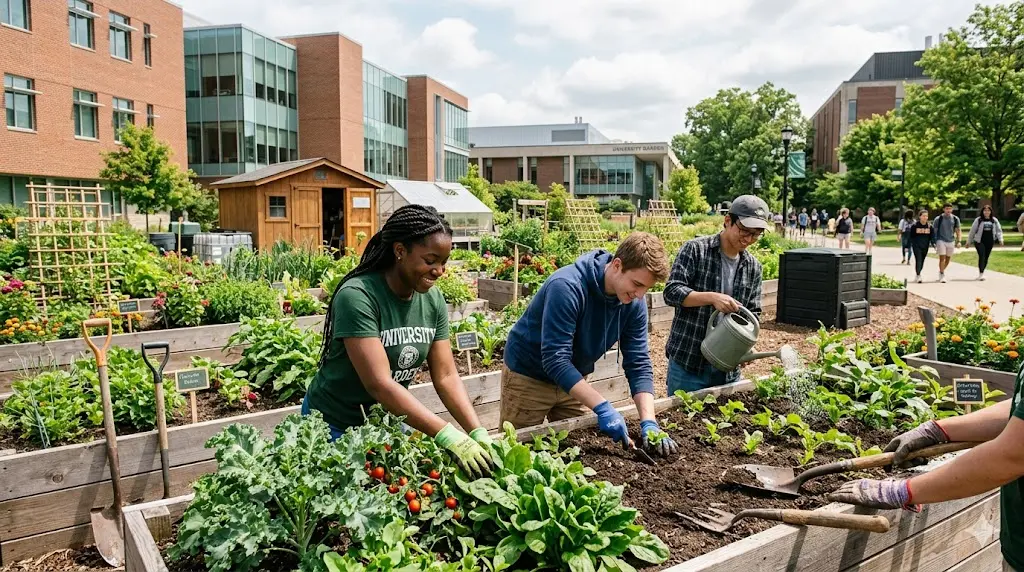
Food security is transforming higher education worldwide because students learn better, stay enrolled longer, and experience fewer financial and health-related barriers when reliable access to nutritious food is available. Universities are increasingly treating food access as a core educational issue rather than a separate social concern.
Why Food Security Is Transforming Higher Education Worldwide is no longer just a policy discussion. It has become a practical challenge that affects student success, graduation rates, mental well-being, and long-term career outcomes. Across many countries, rising living costs, changing economic conditions, and growing student populations have pushed food security to the center of higher education planning.
Here's the thing: students can't perform at their best when they're worried about their next meal. Research from multiple regions suggests that food insecurity impacts concentration, attendance, academic achievement, and overall campus engagement. As a result, institutions are redesigning support systems, creating food assistance programs, and integrating nutrition support into student success strategies.
What Is Food Security and Why Does It Matter?
Food Security: The condition in which individuals have consistent physical and economic access to sufficient, safe, and nutritious food that supports an active and healthy life.
Food security in higher education refers to a student's ability to obtain adequate nutrition without sacrificing other necessities such as housing, transportation, healthcare, or educational materials.
What most people overlook is that food insecurity doesn't affect only low-income students. Rising tuition fees, housing expenses, inflation, and unexpected emergencies can place many students at risk. International students, first-generation learners, and part-time workers often face additional challenges.
When universities address food security, they aren't simply providing meals. They're improving educational outcomes, supporting mental health, and helping students remain focused on learning.
Why Food Security Matters in 2026
In 2026, food security has become a strategic priority for higher education institutions worldwide.
Several factors are driving this change:
Rising Living Costs
Students in many countries face increasing expenses related to housing, transportation, and food. Even those with scholarships or financial aid may struggle to cover everyday necessities.
Academic Performance Concerns
Studies consistently suggest that students experiencing food insecurity are more likely to miss classes, report lower concentration levels, and encounter academic difficulties.
Mental Health Connections
Food insecurity often creates stress and anxiety. When students worry about basic needs, their emotional well-being can suffer, affecting academic engagement and social participation.
Student Retention Goals
Universities increasingly recognize that supporting food access can improve retention and graduation rates. Keeping students enrolled benefits both learners and institutions.
Social Equity Initiatives
Many higher education systems are focused on reducing educational inequalities. Food security programs are becoming an important part of broader student support frameworks.
Expert Tip: If a university wants to improve student outcomes quickly, addressing food insecurity often produces measurable benefits faster than many traditional academic interventions.
How to Improve Food Security in Higher Education: Step by Step
Universities seeking meaningful change often follow a structured approach.
1. Measure Student Needs
Institutions first gather data through surveys, interviews, and campus assessments. Understanding the scale of the problem helps decision-makers allocate resources effectively.
2. Create Accessible Food Programs
Campus food banks, meal-sharing programs, subsidized dining options, and emergency assistance funds can provide immediate support.
3. Reduce Stigma
Many students avoid seeking help because they fear judgment. Clear communication and confidential support systems encourage participation.
4. Build Community Partnerships
Universities frequently collaborate with local organizations, food suppliers, and community groups to expand resources and improve program sustainability.
5. Integrate Support Services
Food assistance works best when combined with financial counseling, housing support, and mental health services.
6. Evaluate and Improve
Successful institutions regularly assess program effectiveness and adjust strategies based on student feedback and outcomes.
Common Misconception: Food Security Is Only About Hunger
This is probably the biggest misunderstanding.
Many people assume food security means preventing extreme hunger. In reality, it also involves nutritional quality, consistency of access, affordability, and long-term sustainability.
A student who skips meals several times each week may not appear visibly hungry, yet their academic performance can still suffer significantly.
Here's a counterintuitive point: some students have access to food but not to nutritious food. Consuming inexpensive, low-quality meals regularly can create health challenges that affect learning just as much as food scarcity.
How Food Security Is Reshaping University Policies
Universities are changing policies in ways that would have seemed unusual a decade ago.
Many institutions now include food security indicators in student success planning. Campus dining systems are being redesigned to offer more affordable options. Emergency grants increasingly cover food-related expenses.
I've seen educational leaders discuss food access with the same seriousness previously reserved for tuition or academic advising. That shift reflects a growing understanding that student achievement depends on more than classroom instruction.
Some institutions are also incorporating food literacy programs that teach budgeting, meal planning, and nutrition awareness. These initiatives help students develop practical skills that continue beyond graduation.
Expert Tip: Universities that combine food support with financial education often achieve stronger long-term results than institutions focusing on emergency assistance alone.
Real-World Examples of Food Security Initiatives
Example 1: Urban University Support Model
Imagine a large metropolitan university where many students work part-time jobs.
After surveying students, administrators discover that a significant percentage regularly skip meals. The institution launches a campus pantry, emergency meal vouchers, and nutrition workshops.
Within two years, retention rates improve and student satisfaction scores rise noticeably.
Example 2: International Student Assistance Program
A university with a large international student population identifies food affordability as a common challenge.
Administrators partner with local organizations to provide discounted groceries and culturally diverse meal options. Student participation increases, and surveys indicate lower stress levels among participants.
These examples demonstrate how practical interventions can produce meaningful educational benefits.
Expert Tips and What Actually Works
Let me be direct: food security programs work best when they're treated as educational investments rather than charitable activities.
In my experience, institutions sometimes focus too heavily on temporary solutions. Emergency food support matters, but sustainable strategies create greater impact.
Here's what most guides miss: students often need flexibility more than complexity. Simple programs with clear eligibility requirements usually outperform complicated systems that create barriers.
Another hot take: universities sometimes underestimate the value of student feedback. Learners frequently know exactly which obstacles prevent them from accessing available support.
Successful programs generally share three characteristics:
Easy access
Minimal stigma
Consistent availability
When these elements are present, participation tends to increase significantly.
Expert Tip: Small improvements in accessibility can generate larger participation gains than major increases in funding.
People Most Asked About Food Security in Higher Education
What causes student food insecurity?
Rising living expenses, limited income, tuition costs, housing expenses, and unexpected financial emergencies are among the most common causes. Multiple factors often combine to create financial pressure.
Does food insecurity affect academic performance?
Yes. Research frequently links food insecurity with lower concentration, reduced classroom participation, increased stress, and lower academic achievement.
Which students face the highest risk?
While food insecurity can affect anyone, higher-risk groups often include low-income students, first-generation students, international students, and those balancing education with employment responsibilities.
Can universities solve food insecurity alone?
Not entirely. Universities play a major role, but effective solutions often involve partnerships with governments, community organizations, and private sector stakeholders.
Why is food security becoming a bigger issue?
Rising costs, larger student populations, economic uncertainty, and growing awareness of student well-being have increased attention on the issue.
How does food security impact mental health?
Food insecurity can contribute to stress, anxiety, and emotional strain. Reliable access to food often improves overall student well-being and campus engagement.
What role does technology play?
Digital platforms help students access support programs, apply for assistance, locate resources, and receive information more efficiently.
Will food security remain a higher education priority?
Most evidence suggests it will. Institutions increasingly view food access as a fundamental component of student success and educational equity.
Final Thoughts
Why Food Security Is Transforming Higher Education Worldwide comes down to a simple reality: students perform better when their basic needs are met. As universities continue adapting to economic, social, and demographic changes, food security is becoming a central pillar of student success strategies. Institutions that recognize this connection are likely to see stronger academic outcomes, improved retention, and healthier campus communities in the years ahead.
Boost your online presence through global newswire services and strengthen search visibility with digital marketing company solutions designed for businesses, startups, agencies, and bloggers. Gain high authority backlinks, broader media coverage, stronger brand visibility, and increased organic traffic through instant publishing opportunities and data-driven promotion strategies that support long-term SEO ranking growth.