

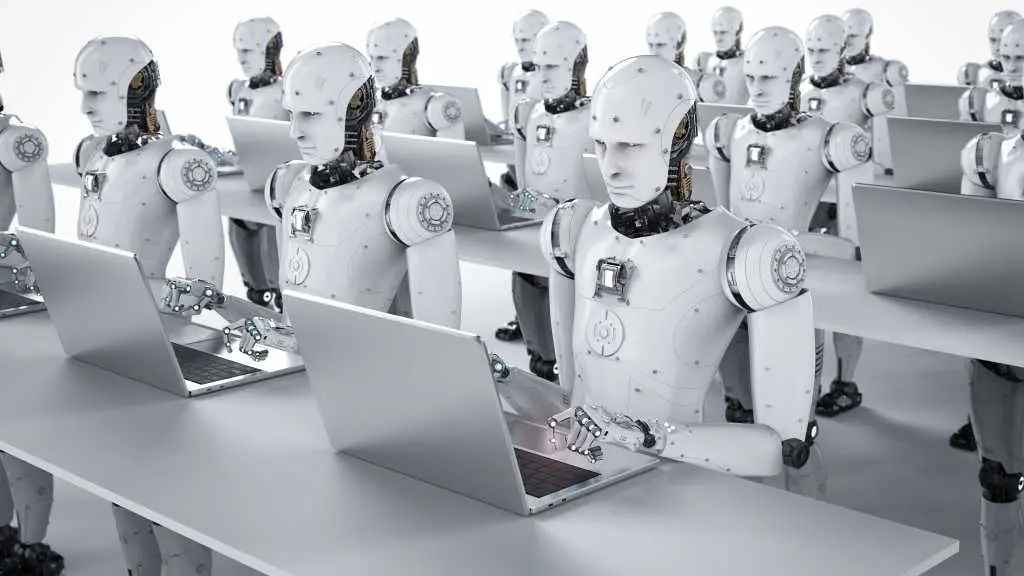
The open source ecosystem, long hailed as a bastion of collaborative development, is facing a new and unexpected challenge: an influx of AI-generated pull requests that are overwhelming maintainers. These submissions, often described as "slop PRs," lack the context and understanding that human contributors bring, and they are creating a significant burden on the small teams that maintain critical infrastructure.
The Economics of Contribution Have Broken
The core problem is a brutal asymmetry in effort. A developer can prompt an AI agent to generate changes across dozens of files in under a minute. But a maintainer must spend an hour carefully reviewing those changes for correctness, edge cases, and long-term alignment with the project's vision. When hundreds of contributors all use AI tools, the result is not a better project but a maintainer who walks away.
Mitchell Hashimoto, founder of HashiCorp, recently indicated he might close external pull requests entirely. He cited the flood of AI-generated submissions as a primary reason. Flask creator Armin Ronacher has described this phenomenon as "agent psychosis," where developers become addicted to the dopamine hit of agentic coding, spinning up agents that run wild through projects.
Real-World Impact on Projects
The OCaml community experienced a vivid example when maintainers rejected an AI-generated pull request containing more than 13,000 lines of code. They cited copyright concerns, lack of review resources, and the long-term maintenance burden. One maintainer warned that such low-effort submissions create a real risk of bringing the pull request system to a halt.
Even GitHub, the host of the world's largest code forge, is exploring tighter pull request controls and UI-level deletion options. This platform-level response indicates that the problem is no longer a niche annoyance but a structural shift in how open source is made.
Small Libraries Face Obsolescence
Beyond the PR flood, AI is also changing the incentives for using small open source libraries. Nolan Lawson, author of the blob-util JavaScript library with millions of downloads, argues that the era of small, low-value utility libraries is over. In the age of Claude and GPT-5, developers can simply ask an AI to generate a utility function in milliseconds, eliminating the need to take on a dependency.
Lawson points out that these libraries served an educational purpose, allowing developers to learn by reading others' code. When replaced with ephemeral AI-generated snippets, that teaching function is lost. The community trades understanding for instant answers.
The Bifurcation of Open Source
This crisis is leading to a bifurcation in the open source world. On one side are massive, enterprise-backed projects like Linux or Kubernetes. These have the resources to build their own AI-filtering tools and the organizational weight to ignore noise. They can afford to maintain high barriers to contribution.
On the other side are "provincial" projects run by individuals or small cores. Many of these are simply stopping external contributions altogether. The irony is that AI was supposed to make open source more accessible, but by lowering the barrier to contribution, it has lowered the value of each contribution. When everyone can contribute, nobody's contribution is special.
Redefining Openness
Open source is not dying, but the meaning of "open" is being redefined. The era of radical transparency, where anyone could contribute, is giving way to an era of radical curation. The future of open source may belong to the few, not the many. The community was always more myth than reality, but AI has made the myth unsustainable.
The most successful open source projects moving forward will be those that are hardest to contribute to. They will demand a high level of human effort, context, and relationship. They will reject the slop loops in favor of slow, deliberate, and deeply personal development. The bazaar was a fun idea while it lasted, but it could not survive the arrival of the robots.
In sum, the open source world does not need more code; it needs more care. Care for the humans who shepherd communities and create code that will endure beyond a simple prompt. The shift may produce a quieter, smaller, and more exclusive ecosystem, but perhaps that is the only way open source survives the age of AI agents.
Source: InfoWorld News