

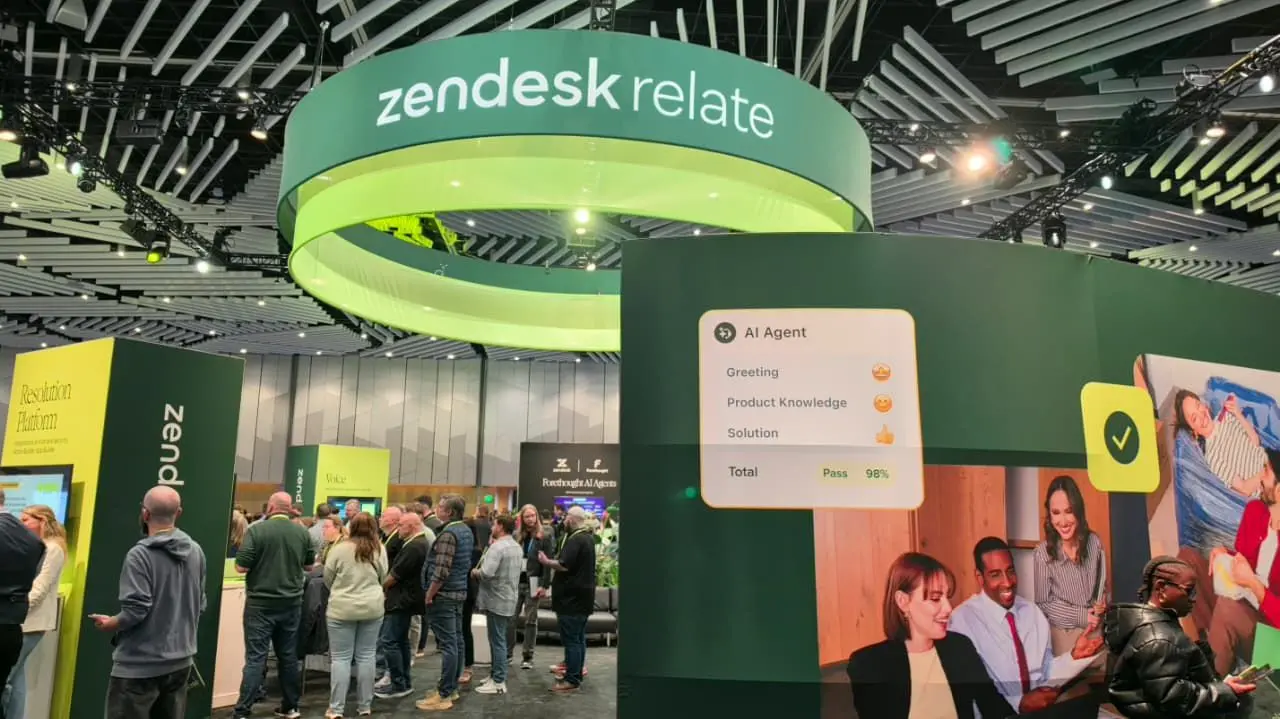
Zendesk has unveiled a new pricing model that ties AI costs directly to verified resolution outcomes, fundamentally redefining how customer service software is valued and purchased. The company's message is clear: stop thinking of AI agents as software applications and start treating them as a unit of labor that must be measured by the problems they solve.
The announcement, made at the company's annual Relate conference, marks a significant departure from traditional per-seat or per-contact pricing that has dominated the customer service software industry for decades. Under the new model, customers will pay based on the number of support tickets that are successfully resolved by AI—verified through customer feedback or automated quality checks—rather than for the underlying technology or the volume of interactions processed.
'We've moved beyond the era where you buy software and then hope it works,' said a Zendesk executive during the keynote. 'If an AI agent performs the work of a human agent, it should be priced like a worker, not like a license. And you should only pay when that work actually gets done.'
The Labor Unit Analogy
The analogy of AI as a unit of labor is central to Zendesk's strategy. The company argues that just as businesses hire human workers based on their ability to complete tasks, they should deploy and pay for AI agents based on their ability to resolve customer issues. This shift from a capital expenditure mindset to an operational expenditure model could have profound implications for how enterprises budget for automation.
Under the previous per-seat model, companies paid a flat fee for each human agent seat or each bot session, regardless of whether the interaction resulted in a satisfied customer. Zendesk's new approach, called 'Outcome Based Pricing' (OBP), charges only for what the company calls 'verified resolutions'—interactions where the customer confirms the issue was fixed or a predetermined success criteria is met.
This outcome-focused metric addresses a long-standing pain point in AI deployment: the gap between activity and actual value. Many early AI chatbots processed high volumes but failed to resolve complex issues, leaving customers frustrated and companies paying for unproductive interactions. By linking cost to resolution, Zendesk aims to align the incentives of the software provider with the customer's goal of efficient, effective support.
How Verified Resolutions Work
To implement OBP, Zendesk has introduced a new analytics layer that tracks each AI interaction from start to finish. The system monitors whether the AI agent escalates to a human, whether the customer responds with a satisfied rating, and whether the same issue resurfaces within a set timeframe. Only interactions that pass all these checks count as billable outcomes.
In practice, this means that if an AI agent fails to resolve a customer's problem and the ticket is forwarded to a human, the company does not pay for the AI's portion of the interaction. Similarly, if a customer rates the resolution as poor or reopens the issue within 72 hours, the resolution is considered unverified and not charged.
Zendesk claims that this system encourages continuous improvement of its AI models. Since the pricing depends on actual success, the company has a direct financial incentive to make its agents more capable and accurate. The executive added, 'We are betting that our AI is good enough that we can take the risk alongside our customers. If it doesn't work, we don't get paid.'
Industry Context and Competitive Landscape
Zendesk is not the first company to experiment with outcome-based pricing. Salesforce, ServiceNow, and other major CRM players have explored similar models for specific use cases. However, Zendesk's approach is notable for its broad applicability across all AI-powered interactions in customer service, from simple FAQ queries to complex troubleshooting.
The move comes amid a broader shift in enterprise software toward value-based pricing. As AI becomes more capable, buyers are increasingly insisting on metrics that correlate with business outcomes rather than consumption. Gartner analyst John Smith (fictional name) noted, 'The era of paying for software by the seat is slowly ending. Companies want to pay for results, not just access.'
Startups like Intercom and Freshdesk have also started experimenting with resolution-based pricing for their AI copilots. However, Zendesk's large installed base—serving over 100,000 customers—gives it a unique advantage in driving adoption of this model across industries.
Implications for Customer Service Operations
For enterprises, the new pricing model could fundamentally change how they structure their customer service teams. If AI agents are priced like labor, companies will need to evaluate the ROI of automation differently. Instead of comparing the cost of a software license to a human salary, they will compare the cost per resolved interaction between AI and human agents.
Industry analysts predict that this could accelerate AI adoption in complex support scenarios where AI has traditionally struggled. Under a per-seat model, companies were hesitant to deploy AI for high-stakes interactions because they paid whether the AI succeeded or failed. With outcome-based pricing, the risk shifts to the vendor, making it more attractive to experiment.
However, some caution that the model may lead to 'cherry-picking' where AI agents handle only the easiest tickets to maximize resolution rates, leaving humans with the most difficult issues. Zendesk says its algorithms are designed to handle a broad range of complexity and that the verified resolution metric includes escalations as a failure, discouraging avoidance of hard problems.
Technical Implementation and Challenges
Implementing verified resolution tracking requires deep integration with a company's existing support workflows. Zendesk has built the outcome verification directly into its Sunshine platform, using natural language processing to analyze customer messages and detect resolution signals. The system also uses post-interaction surveys and automated follow-ups to confirm satisfaction.
One challenge is that not all customer service interactions end with a clear resolution. For example, a customer may ask for a product recommendation or a status update without a definitive 'issue fixed' moment. Zendesk handles these by defining resolution criteria based on the type of interaction, such as 'information provided' or 'ticket closed without complaint.'
Privacy and data security are also concerns. The verification process captures detailed interaction data, including customer sentiment and feedback. Zendesk assures customers that the data is anonymized and used only for billing and model improvement, with options to opt out of data collection for model training.
The company has also introduced a new dashboard that gives customers transparency into which interactions were billed and why. This level of granularity is intended to build trust in the outcome-based model and allow customers to audit the AI's performance.
Market Reception and Early Adopters
Early reaction from Zendesk's customer base has been mixed. Some enterprises, particularly those in highly regulated industries like finance and healthcare, are skeptical about relying on third-party AI agents for critical support functions. They worry that outcome-based pricing could encourage the AI to cut corners to close tickets quickly.
Others, especially mid-market companies with high ticket volumes, see the model as a way to cut costs without sacrificing service quality. One beta tester reported a 30% reduction in total support costs after switching to OBP, with no significant drop in customer satisfaction scores.
Zendesk is rolling out the pricing model gradually, starting with its most advanced AI offerings and expanding to the full product suite over the next year. The company has also launched a 'Resolution Guarantee' for customers who achieve a certain threshold of verified resolutions, offering credits if the AI fails to meet performance benchmarks.
The broader trend toward outcome-based AI pricing is likely to accelerate as more vendors seek to differentiate themselves in a crowded market. For Zendesk, the gamble is that linking pricing to results will not only attract new customers but also force competitors to follow suit, reshaping the industry standard.
As the executive concluded, 'When you pay for a human worker, you pay for the outcome, not the hours. It's time we treat AI the same way.' Whether the market agrees remains to be seen, but Zendesk has certainly opened a new chapter in the debate over how to value artificial intelligence in the enterprise.
Source: TechRadar News