

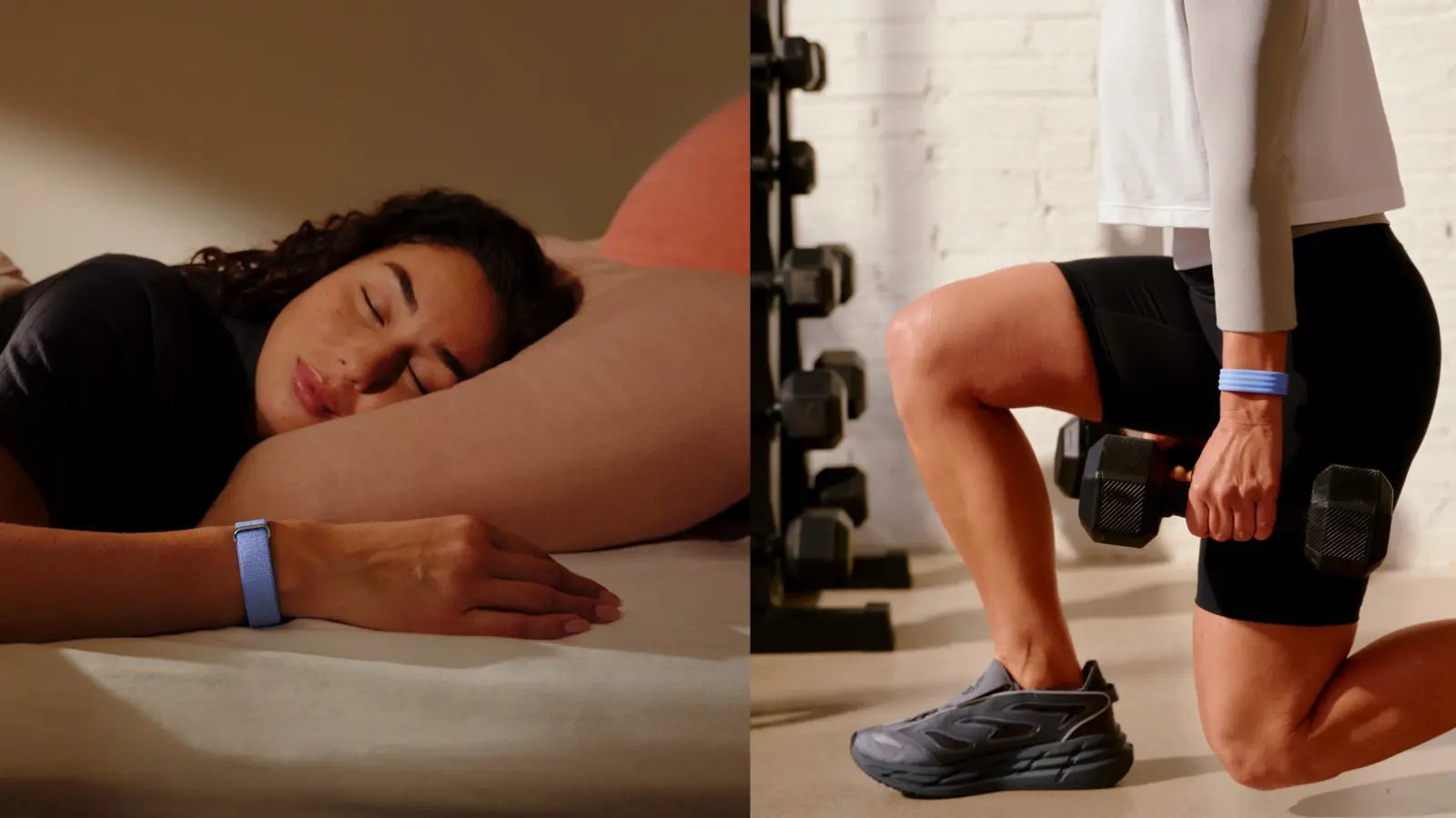
Google has officially unveiled the Fitbit Air, a screenless wearable that takes direct aim at the Whoop band and other minimalist fitness trackers. First teased in March, the device is now available for pre-order at $100, shipping on May 26. The Fitbit Air represents a departure from traditional smartwatches, offering a compact, lightweight design that can be worn in a wristband, chest strap, or even attached to clothing—its modular form factor is intended to make health tracking as unobtrusive as possible.
Design and Comfort
At just 12 grams with a band and 5.2 grams without, the Fitbit Air is remarkably light. Google claims it is 25 percent smaller than the Luxe and 50 percent smaller than the Inspire 3. The device has no screen or buttons; all interaction occurs through a companion app. The company emphasizes comfort, noting that an independent study found it “rated more comfortable than leading competitors.” The band uses a micro-adjustable mechanism for a secure fit, and initial options include a Performance Loop Band, an Active silicone band (sweatproof and wetproof), and an Elevated Modern Band that turns the Air into a fashionable bracelet. Water resistance is rated to 50 meters, though Google clarifies it is not officially waterproof. Additional accessories, such as a chest strap, are under consideration.
Core Health Tracking Features
The Fitbit Air focuses on passive data collection. It continuously monitors heart rate, sleep stages, heart rate variability (HRV), and detects signs of atrial fibrillation (AFib) through irregular rhythm notifications. Sleep tracking includes a nightly Sleep Score, and the device can silently wake users with a vibration motor via Google's Smart Wake feature, which times the alarm to the optimal sleep phase. The Air automatically detects common workouts—running, walking, biking, rowing, elliptical, and other high-heart-rate activities—without requiring manual initiation. Users can manually log about 40 types of exercise in the app, and over 140 activities (including archery, household chores, and badminton) can be added retrospectively. Weekly cardio load and readiness scores, along with basic stats like steps and distance, round out the tracking suite.
AI and the Google Health Coach
As its name suggests, the Fitbit Air is deeply integrated with artificial intelligence. The device is “powered by advanced new machine learning models that are 15% more accurate than previous models,” and the Sleep Score has been refined to better reflect recovery. The headline AI feature is the Google Health Coach, a Gemini-powered conversational interface that provides personalized fitness plans, workout suggestions, and proactive insights based on real-time data. The Coach can integrate cycle health and other vital medical information, with Google emphasizing that user data remains private and secure. This AI layer differentiates the Air from competitors like Whoop, which offer coaching but not through a generative AI chatbot. The Health Coach has been in public preview since October, and the Air will leverage it fully at launch.
Battery and Charging
Battery life is rated at up to one week on a single charge. The Air supports fast charging: five minutes of charging provides up to one day of use, with a full charge taking about 90 minutes. The charger is magnetic and bi-directional, similar to the Pixel Watch 4’s, eliminating the need to align the device precisely.
Special Edition and Pricing
A Special Edition collaboration with basketball star and Google “Performance Advisor” Steph Curry is available for $130. It features a raised interior print for airflow, additional water-resistant coating, and unique design details. Every purchase of the Fitbit Air includes three months of Google Health Premium, which unlocks the full features of the Health Coach and advanced analytics. The standard Fitbit Air remains at $100, making it an aggressive competitor to the Whoop 4.0 (which requires a subscription) and other screenless trackers like the Oura Ring.
Market Context and Implications
The launch of the Fitbit Air signals Google’s intent to dominate the screenless wearable segment, which has grown rapidly thanks to Whoop’s popularity among athletes and health-conscious consumers. By integrating AI in the form of the Health Coach, Google aims to provide more actionable, conversational insights rather than raw data alone. The Air also strengthens the Fitbit ecosystem, which already includes the Pixel Watch series and traditional Fitbits. With its low price point and modular design, the device could appeal to users who want continuous health monitoring without the distraction of a screen. The Steph Curry collaboration adds a celebrity endorsement that may attract a wider audience. As Google continues to refine its health platform through machine learning and Gemini AI, the Fitbit Air could become a cornerstone of its wearable strategy, challenging established players and redefining what a fitness tracker can offer.
Source: Engadget News