

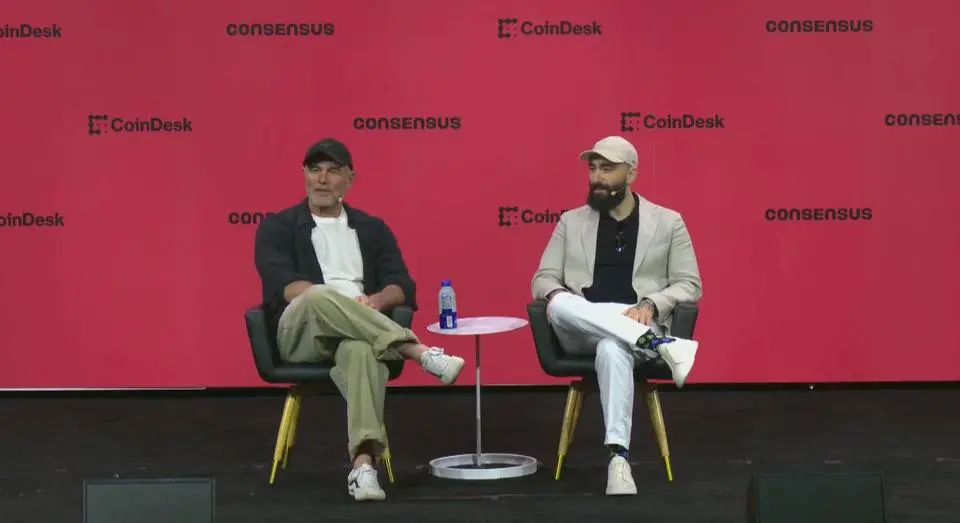
Zcash, the privacy-focused cryptocurrency, is set to roll out quantum-recoverable wallets within the next month as part of a broader roadmap to become fully quantum-proof by 2027. The announcement, made by Zcash co-founder Zooko Wilcox at a recent industry event, marks a pivotal step in addressing the existential threat that quantum computing poses to cryptographic security. Wilcox emphasized that Bitcoin no longer holds up as the cypherpunk-grade money it was intended to be, positioning Zcash as the evolving standard for digital financial privacy and long-term resilience.
Immediate Plans: Quantum-Recoverable Wallets
The first phase of Zcash's post-quantum transition involves deploying quantum-recoverable wallets. These wallets will allow users to recover funds even if private keys are compromised by quantum attacks, using a novel backup mechanism that integrates with Zcash's existing shielded address system. The feature is expected to go live within 30 days, giving users an extra layer of protection against the emerging threat environment. Developers have been testing the implementation on testnet for several months, and the code is now being audited by third-party security firms.
Quantum-recoverable wallets leverage a technique called forward secrecy combined with multiple key-generation seeds. In the event that a quantum computer breaks the elliptic curve cryptography used to derive wallet keys, the recovery seed can generate new, quantum-resistant keys that restore access to the underlying funds. This approach does not require an immediate hard fork of the Zcash blockchain, making it a practical interim solution while the network prepares for a more comprehensive upgrade.
The Three-Year Roadmap to Quantum-Proof Network
Zcash's longer-term vision aims to achieve full post-quantum security within 12 to 18 months, with a target of being completely quantum-proof by 2027. This will involve replacing the current cryptographic primitives—Elliptic Curve Digital Signature Algorithm (ECDSA) and the Jubjub curve used in shielded transactions—with lattice-based or hash-based signature schemes that are believed to be resistant to both classical and quantum attacks. The transition will be executed through a series of network upgrades, each carefully coordinated with miners, node operators, and the wider ecosystem.
Alongside the security overhaul, Zcash is also pursuing a scaling push to reach Visa- and Mastercard-level throughput. The current transaction processing capacity is around 20-30 transactions per second (TPS) on the main chain, but planned improvements—including ShardTree and layer-2 solutions—could boost throughput to tens of thousands of TPS. Wilcox noted that privacy and scalability must evolve together to support global adoption.
Market Impact and Investor Confidence
The announcement has already triggered a dramatic price action: ZEC has rallied 110% over the past 30 days, reaching levels not seen since early 2025. The surge is attributed not only to the quantum-proof roadmap but also to a significant investment from Multicoin Capital, a prominent crypto venture firm that has publicly backed Zcash as a leading privacy asset. Multicoin's involvement has renewed interest in privacy-focused crypto assets, which have faced regulatory headwinds in several jurisdictions.
Other factors contributing to the rally include increased usage of the shielded pool. According to on-chain data, the shielded pool now holds approximately 30% of all circulating ZEC, up from around 18% a year ago. This growth indicates that users are actively moving coins into private transactions, driven by evolving compliance frameworks and demand for financial anonymity.
Adoption Drivers: Cross-Chain Swaps and Upgrades
A key catalyst for adoption has been the integration of cross-chain swaps into shielded ZEC via Near Intents and other interoperability protocols. These swaps allow users on Ethereum, Solana, and other networks to exchange tokens for shielded ZEC without going through centralized exchanges, thereby preserving privacy from the moment of acquisition. The Near Intents system, which uses intent-based settlement, has already processed over $50 million in volume for Zcash-related swaps since launch.
Proposals are also under discussion within the Zcash community to cut block times from the current 75 seconds to 30 seconds, which would make the network more responsive for point-of-sale payments. Additionally, token-holder voting mechanisms are being explored to give ZEC holders greater governance power over protocol upgrades and treasury allocations. These changes could further incentivize participation and lock-up of supply.
Historical Context and Broader Implications
Quantum computing has long been considered a long-term threat to cryptocurrencies. Most blockchains, including Bitcoin and Ethereum, rely on public-key cryptography based on elliptic curves, which are vulnerable to Shor's algorithm running on a sufficiently large quantum computer. While such a machine does not yet exist, industry experts estimate that a quantum computer with around 4,000 logical qubits could break Bitcoin's ECDSA in hours. Companies like IBM, Google, and Microsoft are racing toward that milestone, with some projecting fault-tolerant quantum computers within the next decade.
Zcash's proactive approach places it ahead of most other major cryptocurrencies in preparing for this scenario. Bitcoin's developer community has discussed post-quantum upgrades, but no concrete timeline has been established. Ethereum's transition to proof-of-stake did not address quantum resistance, though the network could incorporate quantum-safe signatures in future hard forks. Other privacy coins, such as Monero, have also begun exploring quantum-resistant cryptography, but Zcash's roadmap is the most detailed and time-bound.
The decision to prioritize quantum recovery over a full overhaul reflects a pragmatic understanding of network upgrades. Hard forks are disruptive and require consensus among stakeholders. By offering a recoverability feature first, Zcash gives users immediate peace of mind while the community deliberates on the best long-term solution. This two-phase strategy could serve as a template for other blockchains facing similar technological shifts.
Challenges and Criticisms
Despite the optimism, the roadmap faces substantial challenges. Post-quantum cryptographic algorithms are often slower and require larger signature sizes, which could increase transaction fees and reduce throughput unless compensated by scaling improvements. Zcash's use of zero-knowledge proofs (zk-SNARKs) already adds computational overhead; layering post-quantum cryptography on top could exacerbate these issues. The development team is actively researching efficient implementations, including the use of lattice-based SNARKs that combine privacy and quantum resistance.
Another concern is regulatory risk. While privacy features are valued by users, they also attract scrutiny from financial regulators who fear illicit use. Zcash's 'selective disclosure' feature allows users to reveal transaction details to auditors, but anti-money laundering (AML) compliance remains a contentious topic. The quantum-proof upgrade may complicate compliance if it enables even stronger anonymity.
Nevertheless, the community appears united behind the vision. The Zcash Foundation and Electric Coin Company have released joint statements committing resources to the post-quantum transition. The upcoming block time reduction and governance proposals are expected to be voted on by Zcash holders through a decentralized process, with results likely by the end of the year.
Looking Ahead: A New Standard for Digital Money
Zcash's quantum-proof roadmap is more than a technical upgrade; it is a statement of intent. In the world of cryptocurrency, where trust is often placed in the code, preparing for a future where quantum computers exist is a direct challenge to the status quo. Wilcox has repeatedly argued that any digital currency that fails to address quantum vulnerability is not truly 'digital gold' or a store of value. As he put it during his presentation, 'The cypherpunk dream of self-sovereign money depends on mathematics that cannot be broken—and that means we must evolve before the threat arrives.'
With the first quantum-recoverable wallets arriving in a matter of weeks, and a full post-quantum transition set for the 2026-2027 timeframe, Zcash is positioning itself as the most forward-thinking cryptocurrency in terms of security. Whether that translates into lasting market dominance remains to be seen, but for now, the project has captured the attention of investors, developers, and privacy advocates around the world.
Source: Coindesk News